
The Crochet Sunflower Wind Spinner Pattern is a cheerful decorative crochet project that combines the warm colors of a sunflower with the playful spiral movement of a hanging wind spinner. Inspired by the project shown in the image, this design uses a long brown center, expanding yellow sections, and a green decorative edging to create a cascading sunflower-inspired spiral.
Small crocheted sunflowers at the top and bottom complete the piece and give it a polished handmade appearance. It is a lovely project for decorating a porch, craft room, covered patio, window area, or any indoor space where a colorful hanging ornament can add personality.
The construction may look complicated at first, but the spiral effect is created with a surprisingly approachable crochet technique based on increasing several stitches into each stitch.One of the most attractive features of this Crochet Sunflower Wind Spinner Pattern is the combination of texture and movement. Instead of crocheting separate curved pieces and sewing them together, the main spinner can be worked from a relatively simple foundation before increases encourage the fabric to curl naturally.
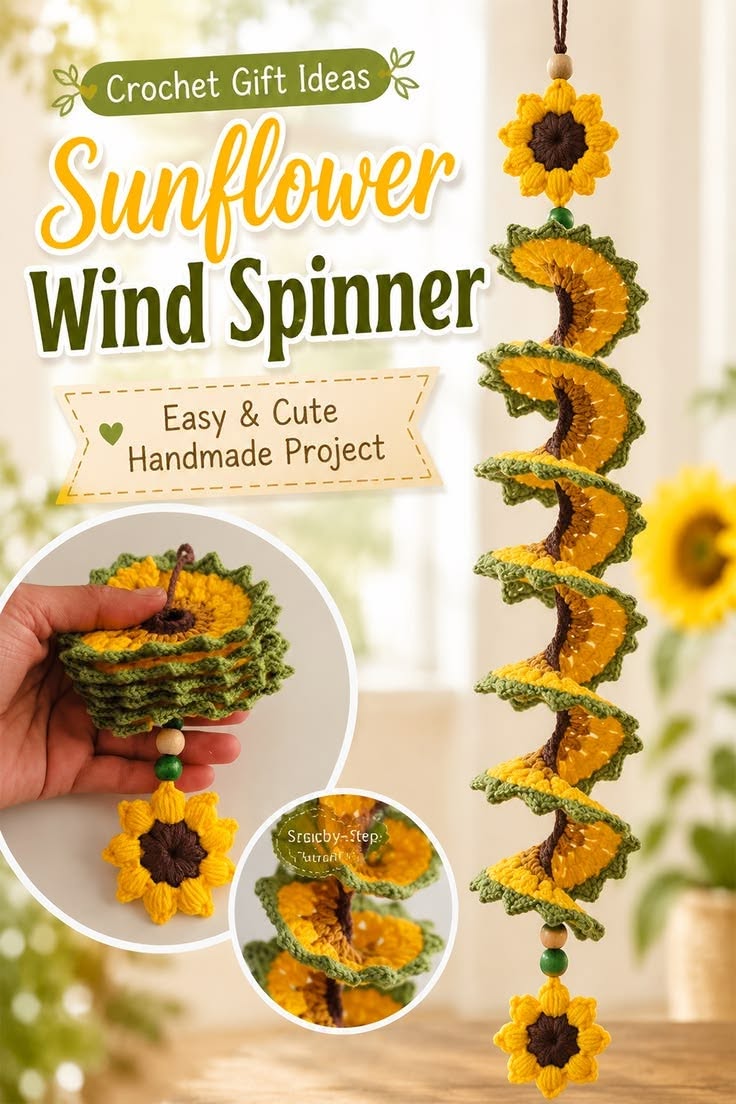
The brown center visually resembles the dark center of a sunflower, while yellow crochet stitches create the petals and green crochet edging adds contrast along the outside. This makes the project interesting enough for experienced crocheters while remaining accessible to adventurous beginners who already understand basic US crochet terminology. Because exact tension, yarn weight, and the number of increases affect how tightly the piece spirals, crocheters can also customize the finished ornament rather than worrying about reproducing one rigid measurement.
For this tutorial, the instructions use US crochet terms and a flexible construction method that can be adjusted to the desired length. Useful abbreviations include ch (chain), sl st (slip stitch), sc (single crochet), hdc (half double crochet), dc (double crochet), tr (treble crochet), and st/sts (stitch/stitches). You will need brown, sunflower yellow, and leafy green yarn, plus a crochet hook appropriate for your chosen yarn, scissors, a yarn needle, and optional wooden beads for decoration. Medium-weight yarn with approximately a 4.0–5.0 mm hook is a practical starting point, although lighter yarn creates a more delicate spinner. Always check that decorative beads are securely attached, and keep ornaments containing small parts away from babies, young children, and pets.
Materials, Crochet Keys, and Preparing the Sunflower Spinner
The central idea behind the Crochet Sunflower Wind Spinner Pattern is controlled increasing. When many stitches are worked into a smaller foundation, the new row becomes considerably longer than the row beneath it. Since the fabric cannot remain flat, it begins to twist and curl. Additional increasing exaggerates this effect until the characteristic corkscrew shape appears. Understanding this principle makes the project much easier because you are allowing the crochet fabric to form the spiral instead of trying to manually twist it into position.
For materials, prepare approximately 30–50 g of brown yarn, 50–80 g of yellow yarn, and 30–50 g of green yarn, depending on the desired size. These quantities are intentionally generous estimates because yarn consumption changes with spinner length, yarn thickness, hook size, and individual tension. A 4.0 mm or 4.5 mm crochet hook works well with many worsted or medium-weight yarns. You will also need a tapestry needle for weaving in ends and attaching the sunflower motifs. Optional wooden or painted beads can be threaded onto the hanging cord to reproduce the decorative appearance of the inspiration image.
The essential crochet keys are straightforward. Ch means chain and is used to create the foundation and hanging cords. Sl st means slip stitch, a short joining stitch useful for closing rounds and moving around a motif. Sc means single crochet, a compact stitch that creates a firm center or edging. Hdc means half double crochet, which provides slightly more height. Dc means double crochet and produces a taller, more open fabric. Tr, or treble crochet, is taller still and can be useful when shaping prominent sunflower petals.
Begin by choosing the final length of your spinner. For a medium hanging decoration, a foundation measuring approximately 45–60 cm is a useful starting range. Chain until the strand reaches the desired measurement without stretching it. Add one turning chain if your first structural row will use single crochet. The precise chain count is less important than maintaining an even foundation, because different yarn and hook combinations will produce different numbers of chains per centimeter.
Working in brown, crochet one sc in each chain across the foundation. This creates a stronger central strip and establishes the brown line visible through the center of the finished spiral. Keep the stitches relaxed and consistent. If the foundation is worked too tightly, the finished spinner may bunch unevenly. If necessary, use a hook 0.5 mm larger for the foundation chain and return to your normal hook for the remaining rows.
Before moving to yellow, inspect the brown foundation. It should lie reasonably straight, although a slight curve is perfectly acceptable. Do not worry if it does not resemble a spinner yet. The dramatic twisting begins when the increasing rows are added. This simple brown foundation is an important structural element of the Crochet Sunflower Wind Spinner Pattern, providing both support and the sunflower-inspired color contrast that runs through the center.
How to Crochet the Yellow Spiral and Green Decorative Edge
Join the yellow yarn at one end of the brown foundation. Chain two or three stitches according to the height you prefer, then begin the primary increase row. A practical method is to work 2 dc into each stitch across. This immediately doubles the approximate stitch count and encourages the fabric to wave. If your yarn is particularly thick or your tension is tight, you may notice curling before reaching the opposite end. That is normal and indicates that the increase technique is working.
For a fuller spinner similar to the one shown in the inspiration image, work another yellow row with additional increases. One approachable sequence is 2 dc in each stitch again for a very dramatic spiral, or alternate 1 dc in the next stitch, 2 dc in the following stitch for a softer curl. The second option uses less yarn and produces a more open spiral. There is no need to force the piece into shape while crocheting. Allow it to twist naturally as the stitch count expands.
The Crochet Sunflower Wind Spinner Pattern can be adjusted at this stage. If the spiral looks too loose, increase more frequently in the next section. If it curls so tightly that the yellow portions are hidden, reduce the frequency of increases. This is one reason the project is enjoyable for customization. Crochet tension differs from person to person, so observing the fabric is often more useful than following an inflexible stitch count.
Once the yellow spiral has reached a pleasing width, attach the green yarn along the outer edge. Work one round or row of single crochet around the yellow edge as a stabilizing base. The green color represents the leafy outer portion of a sunflower and makes the yellow stand out. Keep this first green row relaxed so that it follows the curves instead of pulling the spiral inward.
For a decorative scalloped edge, use a simple repeat such as sl st in the next stitch, skip 1 stitch, 5 dc in the next stitch, skip 1 stitch, sl st in the next stitch. Continue this sequence along the outer edge. Depending on your stitch count, you may need to adjust the final repeat slightly. Another option is a picot-inspired border made with sc, ch 3, sl st into the first chain, sc in the next stitches. Either technique produces the leafy texture associated with the photographed project.
When the edging is complete, fasten off and weave the yarn ends securely into the reverse side. Hold the spinner vertically and gently guide the crochet into an even corkscrew. Avoid aggressively twisting or stretching it. The increases should already have produced the shape. Starting at the top, distribute each turn so the yellow sections are visible and the green border forms a continuous decorative line around the spiral.
Crocheting the Sunflower Motifs and Assembling the Wind Spinner
The small flowers are an important finishing feature of the Crochet Sunflower Wind Spinner Pattern. Begin the first sunflower with brown yarn. Make a magic ring, or chain four and join with a slip stitch if you prefer not to use a magic ring. Work approximately 10–12 sc into the center and join with a slip stitch. For a slightly larger center, work a second round by increasing evenly until the circle lies flat.
Change to sunflower yellow yarn for the petals. A simple petal can be made by working sl st, ch 2, 2 dc, ch 2, sl st into the same or neighboring stitch space, depending on the size of the center. Repeat evenly around the circle. For more pronounced petals, substitute a treble crochet for the double crochets. Aim for approximately 8–12 petals distributed evenly around the center rather than forcing an exact number when your yarn or center size requires adjustment.
Make a second sunflower using the same instructions so the spinner can have one flower near each end. If desired, make the lower flower slightly larger for visual balance. Block the flowers gently with your fingers or according to the care instructions for your chosen yarn. Avoid excessive stretching because the petals should retain some texture and dimension.
To create the upper hanger, crochet a brown chain approximately 15–25 cm long, or make it longer if the ornament will hang from a high hook. Slip stitch back along the chain for additional strength if desired. Attach the cord securely to the top of the spiral. A wooden bead can be added above the sunflower, as suggested by the inspiration image, but the project also looks attractive without beads.
Position the first sunflower between the hanging cord and the main spiral. Sew it securely using matching yarn and a tapestry needle. For a decorative transition, add a short yellow tassel, green bead, wooden bead, or crocheted knot between components. If using beads, confirm that the hole is large enough for the yarn and secure each component with several strong knots. These decorative elements are optional and do not affect the function of the crocheted spiral.
At the bottom, attach another short cord, optional beads, and the second sunflower. Lift the completed project by the top loop and allow it to hang freely. Adjust the spiral with your hands until the turns are evenly distributed. The finished crochet hanging decoration should have a flowing corkscrew silhouette, with brown visible through the center, yellow forming the main sunflower-colored spiral, and green defining the outer edges.
Finishing, Customizing, and Caring for Your Crochet Sunflower Wind Spinner
Finishing carefully can transform a simple crochet project into an attractive handmade decoration. Examine every yarn end and weave it through several stitches in different directions. Trim only after you are confident the end will remain secure. Pay particular attention to the points where the flowers, hanging loop, beads, and spinner connect because these areas support the weight of the finished project.
If your spiral appears uneven, place the project on a clean surface and gently arrange the turns. For washable yarn, very light blocking may help relax inconsistent stitches, but always follow the yarn manufacturer’s care instructions. Acrylic yarn may respond differently from cotton, while wool can change considerably with moisture and heat. Avoid applying high heat directly to synthetic fibers.
Color customization offers many possibilities. The traditional sunflower crochet pattern uses golden yellow petals, a dark brown center, and natural green edging, but the construction can easily become a seasonal decoration. Rust, mustard, olive, and chocolate create an autumn palette. Cream and sage produce a softer farmhouse look, while brighter yellow and fresh green create a cheerful spring or summer decoration.
Length is equally customizable. A short spinner can work well as a small window ornament, while a longer version creates a dramatic vertical decoration. To change the length, simply adjust the number of foundation chains before beginning the increasing rows. Remember that a longer foundation requires considerably more yarn because every increase row multiplies the number of stitches.
This project also provides useful practice with several fundamental techniques, including foundation chains, single crochet, double crochet, crochet increases, color changes, working in the round, and decorative edging. Beginners can simplify the design by omitting the beads or using a basic single crochet border. More experienced crocheters can experiment with picots, shell stitches, layered sunflower petals, or additional leaves.
Finally, decide where the spinner will be displayed. Yarn crafts generally last longer indoors or in a protected covered area rather than being continuously exposed to rain, intense sunlight, or strong wind. A window, craft room, covered porch, or seasonal display area can showcase the movement and colors beautifully. With proper finishing and gentle care, the Crochet Sunflower Wind Spinner Pattern becomes a charming handmade decoration that can be enjoyed season after season.
FAQ – Frequently Asked Questions About the Crochet Sunflower Wind Spinner Pattern
Is the Crochet Sunflower Wind Spinner Pattern suitable for beginners?
Yes. An adventurous beginner who understands chain, single crochet, double crochet, slip stitch, and basic increases should be able to follow the construction. The spiral may look advanced, but most of its shape comes automatically from increasing the stitch count.
Why does the crochet wind spinner curl?
The curl is created by placing multiple stitches into the stitches of the previous row. Each increase makes the new row longer than the supporting row beneath it. The excess fabric has nowhere to lie flat, so it naturally forms waves and eventually a spiral.
How can I make the spiral tighter?
Increase more frequently. Working two or even more stitches into each stitch produces substantially more fabric and therefore a stronger curl. However, extremely aggressive increases can make the spinner bulky, so it is helpful to check the shape while working.
How can I make the spiral less tight?
Reduce the number of increases. For example, instead of placing two double crochets into every stitch, alternate one double crochet in one stitch and two double crochets in the next. Your yarn thickness and tension will also influence the final curl.
What yarn is best for a sunflower wind spinner?
Cotton and acrylic are both practical choices. Cotton offers excellent stitch definition and a slightly firmer structure, while acrylic is lightweight, widely available, and offered in many colors. Medium-weight yarn is especially convenient for a first project.
What hook size should I use?
A hook around 4.0–5.0 mm is a useful starting range for many medium-weight yarns. However, the yarn label and your personal tension should guide the final choice. Use a hook that creates flexible stitches without leaving the fabric excessively loose.
Can I make the spinner longer?
Absolutely. Increase the length of the starting chain. A foundation measuring approximately 45–60 cm creates a medium-sized decoration, while a longer foundation produces a longer finished spinner. Remember to prepare extra yarn because the increasing rows can consume yarn quickly.
Do I need wooden beads?
No. The beads are decorative rather than structural. You can replace them with crocheted balls, knots, tassels, or simply connect the flowers directly to the spinner. Avoid loose small components when the decoration could be accessible to young children or pets.
Can I use different colors instead of sunflower colors?
Yes. The brown, yellow, and green combination emphasizes the sunflower theme, but the same construction works with almost any color palette. Seasonal colors, rainbow yarn, pastels, or scrap-yarn combinations can create entirely different versions from the same basic technique.
How do I keep the sunflower petals from curling too much?
Maintain relaxed tension and avoid overcrowding the petal round. If the flower becomes excessively ruffled, use fewer or narrower petals. Gentle blocking appropriate for the yarn fiber can also help the petals sit more evenly.
Can this crochet wind spinner be used outdoors?
It is best used indoors or in a protected covered location. Constant exposure to rain, direct sunlight, dirt, and strong wind can fade or damage yarn over time. If you choose an outdoor location, select suitable washable yarn and bring the ornament inside during severe weather.
Conclusion
Video Tutorial:
The Crochet Sunflower Wind Spinner Pattern combines several enjoyable crochet techniques in one decorative project. Beginning with a simple brown foundation, you learned how strategic crochet increases can transform a straight strip into a dramatic spiral, how yellow stitches create the sunflower-inspired body, and how a green decorative crochet edge adds definition and texture.
You also learned the essential US crochet abbreviations, including ch, sl st, sc, hdc, dc, and tr, along with a straightforward method for crocheting separate sunflower motifs. These small flowers can be attached to the top and bottom of the spinner, with optional beads and cords adding extra decorative detail.
Most importantly, this pattern is flexible. You can adjust the length, yarn weight, hook size, amount of curling, petal style, edging, and colors to create a unique version. Once you understand how the increasing rows produce the spiral, the same basic method can inspire many other hanging crochet decorations.
Whether you make it in classic yellow, brown, and green or experiment with your own palette, the finished project can bring handmade warmth and movement to a favorite space. If you try this Crochet Sunflower Wind Spinner Pattern, leave your sincere opinion about the project and share your suggestions for colors, edging styles, or other creative variations you would love to see.