
The Log Cabin and Variations Quilt Pattern is one of the most recognizable and timeless quilt designs in the world of textile arts. From its humble beginnings as a practical way to reuse fabric scraps, it has evolved into a beloved craft that symbolizes warmth, creativity, and tradition. Whether you are new to quilting or an experienced maker, understanding this pattern and its many variations can open up countless possibilities for your projects.
At its core, the Log Cabin quilt pattern is based on a simple block construction, where strips of fabric are sewn around a central square. This central square often represents the heart of the home or the warmth of a hearth, which is why the design carries such strong emotional and cultural significance. Over time, quilters have adapted the structure to create numerous variations, each with its own symbolism and visual effect. These adaptations not only keep the craft alive but also ensure it remains relevant in modern quilting communities.
In today’s world, where handmade crafts are increasingly appreciated for their uniqueness and authenticity, the Log Cabin and Variations Quilt Pattern continues to inspire makers across generations. It is both a historical artifact and a modern canvas, allowing quilters to combine tradition with innovation. With its versatility, symbolic depth, and visual appeal, it remains one of the most rewarding patterns to learn, explore, and master.
The Origins and Symbolism of the Log Cabin Quilt
The history of the Log Cabin and Variations Quilt Pattern dates back to the 19th century, though similar designs can be traced even further in ancient textiles. It rose to popularity in the United States during the Civil War era, where the central square—often stitched in red—symbolized the hearth or the heart of the family home. This central idea transformed the quilt into more than just a practical blanket; it became a visual story of family, security, and resilience.
For many communities, the Log Cabin quilt pattern carried symbolic meaning beyond its construction. Some historians note that quilts with dark and light fabric arrangements were used as subtle signals in the Underground Railroad, representing safety or direction. Though these stories remain partly folkloric, they reflect the deep cultural importance of quilts in American history.
Another fascinating aspect of this pattern is how the arrangement of dark and light fabrics creates striking visual effects. Depending on how the blocks are aligned, quilters can create diagonal lines, diamond shapes, or radiating designs. These visual variations not only highlight the maker’s skill but also reveal how much symbolism was embedded in these seemingly simple fabric choices.
The Log Cabin and Variations Quilt Pattern also reflects the spirit of resourcefulness. Quilters often relied on leftover fabric, clothing scraps, or any available textile. This practice turned necessity into artistry, showcasing how creativity can flourish even under limited circumstances.
The symbolism of the pattern still resonates with quilters today. Many choose fabric colors intentionally, assigning meaning to the central block and surrounding strips, making each quilt not just a piece of fabric but a personal story.
From its roots in cultural storytelling to its role as a practical art form, the Log Cabin and Variations Quilt Pattern carries a legacy that continues to shape quilting traditions around the world.
Exploring the Classic Log Cabin Design
When most people think of a quilt, the classic Log Cabin quilt pattern often comes to mind. This design features a square center, usually red or yellow, surrounded by strips of fabric that alternate between dark and light tones. The balance between these tones is what creates the pattern’s depth and striking visual rhythm.
The beauty of the traditional Log Cabin lies in its simplicity. Even beginners can learn the technique quickly, yet the possibilities for customization are nearly endless. By experimenting with different fabric colors and textures, quilters can create a quilt that feels traditional, modern, or entirely unique.
One of the reasons the Log Cabin and Variations Quilt Pattern is so enduring is its adaptability. The same block can be repeated hundreds of times, yet no two quilts will ever look alike. The quilter’s personal touch—whether in color choice, fabric selection, or block arrangement—ensures that each finished quilt is truly one-of-a-kind.
The classic design is also highly versatile in terms of use. While it works beautifully as a bed quilt, many makers use it for wall hangings, table runners, or decorative throws. Its symmetrical appeal allows it to complement both traditional and contemporary home décor.
For those who appreciate tradition, sticking to the original dark-and-light balance provides a timeless aesthetic. For those who crave innovation, experimenting with bold colors or unconventional fabrics can push the pattern into new creative territory.
Ultimately, the classic Log Cabin quilt pattern is more than just a starting point—it is the foundation for exploring countless variations that highlight the artistry of quilting.
Variations of the Log Cabin Quilt Pattern
One of the most exciting aspects of the Log Cabin and Variations Quilt Pattern is the diversity of designs that emerge from slight adjustments. Each variation transforms the mood and style of the quilt, showing how flexible the pattern truly is.
The “Barn Raising” variation arranges the blocks in concentric diamonds, producing a powerful, radiating effect. This design draws the eye to the center of the quilt and creates a bold statement, perfect for larger projects like bedspreads.
Another well-loved variation is the “Straight Furrows” layout. By aligning the blocks in rows, the quilt takes on a more linear and organized appearance. This design is excellent for showcasing contrast between light and dark fabrics, making the pattern appear sharp and geometric.
The “Fields and Furrows” design adds a sense of movement to the quilt. With diagonal arrangements, the blocks mimic the appearance of rows in a field, symbolizing growth, work, and harmony with nature. This variation is particularly appealing for those who enjoy rustic or countryside themes.
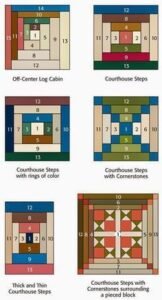
“Courthouse Steps” is another popular twist. Instead of building fabric strips around one side of the central square, strips are added evenly to opposite sides, creating a stair-like effect. This variation symbolizes structure and balance, offering a slightly different rhythm while still staying true to the Log Cabin concept.
Finally, modern quilters have introduced asymmetrical variations, mixing fabrics in unconventional ways. These designs break from tradition but maintain the essence of the Log Cabin quilt pattern, proving its ability to evolve with contemporary tastes.
Modern Uses and Creative Approaches
The Log Cabin and Variations Quilt Pattern continues to inspire modern quilters who seek to balance tradition with creativity. Its enduring structure makes it an ideal canvas for experimenting with fabric, color, and scale.
Today, many quilters embrace minimalist approaches, using solid fabrics and monochromatic color schemes. This creates a sleek and modern interpretation of the pattern while maintaining its recognizable block structure.
Others take advantage of modern fabric printing, incorporating bold designs, florals, or abstract prints into the blocks. This approach transforms the quilt into a vibrant piece of art, blurring the line between craft and fine art.
Sustainability has also become a significant focus in modern quilting. Many makers use the Log Cabin quilt pattern to upcycle old clothing, linens, or fabric scraps, continuing the tradition of resourcefulness while addressing contemporary environmental concerns.
Quilting communities today often use the pattern in collaborative projects, with multiple makers contributing blocks to a single quilt. These projects highlight the sense of unity and shared creativity that quilting has always embodied.
With digital tools and design software, quilters can now plan their Log Cabin variations before stitching a single piece of fabric. This not only makes the process more efficient but also allows for precise experimentation with colors and layouts.
FAQ About Log Cabin and Variations Quilt Pattern
What is the Log Cabin quilt pattern?
The Log Cabin quilt pattern is a block-based design where fabric strips are sewn around a central square, often symbolizing warmth and home.
Why is the central square important in the Log Cabin pattern?
Traditionally, the central square represents the hearth or heart of the home, carrying deep symbolic meaning in quilt design.
What are the most popular variations of the Log Cabin quilt pattern?
Some well-known variations include Barn Raising, Straight Furrows, Fields and Furrows, and Courthouse Steps. Each layout changes the overall visual effect.
Is the Log Cabin quilt pattern good for beginners?
Yes, it is beginner-friendly because of its simple construction, yet it also offers endless opportunities for advanced creativity.
How can I make my Log Cabin quilt unique?
You can personalize your quilt by experimenting with fabric choices, color schemes, and block arrangements, ensuring your design reflects your style.
Are Log Cabin quilts still popular today?
Absolutely. The pattern remains a favorite among both traditional and modern quilters, proving its timeless appeal.
The Log Cabin and Variations Quilt Pattern is a timeless design that bridges the gap between tradition and innovation. From its historical symbolism to its adaptability in modern craft, it remains a cornerstone of quilting artistry. By exploring its origins, variations, and creative applications, quilters gain not only a technical skill but also a meaningful connection to cultural history.
Now that you’ve learned about its rich background and creative potential, what do you think about the Log Cabin and Variations Quilt Pattern? Share your honest opinions and suggestions—I’d love to know how this pattern inspires your own quilting journey.